
Choosing the right air conditioning in Perth is not simply a matter of selecting a well-known brand or buying the largest system within your budget. Perth’s long, hot summers, cool winter mornings and varied property styles mean the system must be carefully matched to the building, the people using it and the way each space needs to be heated or cooled.
Dacs Air Conditioning & Electrical helps Perth homeowners and businesses choose, install, service and repair air conditioning systems suited to local conditions. With more than 28 years of professional industry experience, the Dacs team works with residential and commercial properties across the Perth metropolitan area.
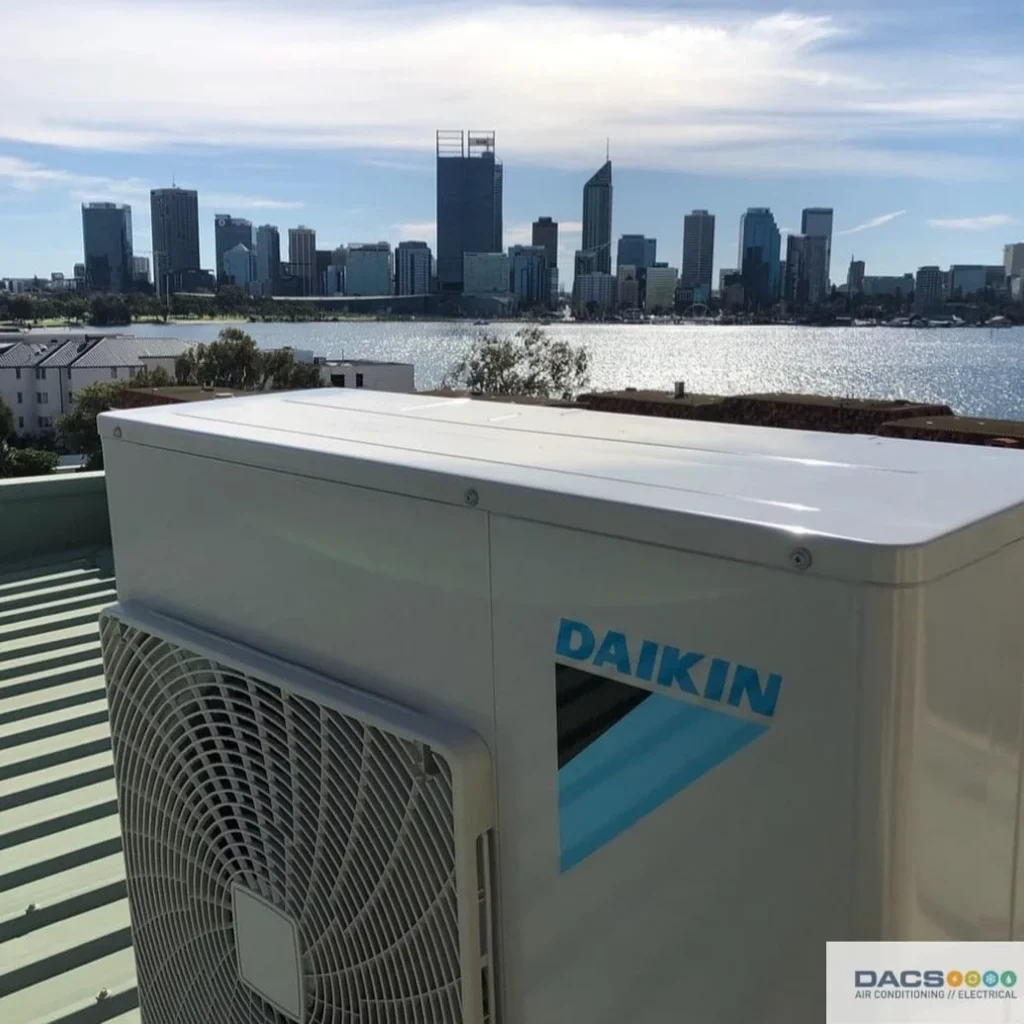
The right system should deliver dependable comfort without wasting electricity, creating excessive noise or struggling on the days it is needed most. That requires more than choosing between split system and ducted air conditioning. Correct system sizing, property layout, insulation, room orientation, installation quality and ongoing maintenance all influence the final result.
This guide explains:
Dacs specialises in systems from established manufacturers including Daikin and Mitsubishi Electric. Dacs is a Daikin Authorised Dealer and Mitsubishi Electric Diamond Dealer, providing access to product knowledge, installation experience and ongoing service support.
The purpose of this guide is not to suggest that one air conditioner is right for every Perth property. It is to help you understand the differences, ask better questions and make a more confident decision.
The best air conditioning system for a Perth property is one that is correctly sized, professionally installed and suited to the way the building is used. Split systems work well for individual rooms, while ducted reverse-cycle systems provide discreet whole-property comfort. Evaporative cooling and cassette systems may suit particular property types and operating needs.
Before selecting a system, consider:
A bigger air conditioner is not automatically a better air conditioner. An oversized system may switch on and off too frequently, while an undersized system may run continuously without reaching the desired temperature. Both situations can reduce comfort, increase operating costs and place unnecessary strain on the equipment.
The safest approach is to have the property assessed by a qualified air conditioning professional. Dacs provides free, no-obligation in-home quotes for new installations and can recommend an appropriate system based on the property and its practical requirements.
Perth’s climate creates very different air conditioning demands across the year. A system may need to cool a living area during a run of extremely hot summer days and then provide efficient heating on cold winter mornings.
The best result comes from considering the property as a complete environment rather than treating the air conditioner as an isolated appliance.
During extended hot weather, an air conditioner may operate for many hours at a time. A poorly sized or incorrectly installed unit can struggle to maintain the selected temperature, particularly in rooms with large windows, high ceilings, poor insulation or direct afternoon sun.
This can lead to:
Correct planning helps ensure the air conditioner can meet realistic demand without continually working at its limit.
Floor area is important, but it is only one part of air conditioner sizing. Two rooms of the same size may require different systems because their construction, orientation and use are different.
A professional assessment may consider:
For commercial properties, the assessment may also need to account for customer traffic, operating hours, computers, lighting, kitchen equipment and doors opening throughout the day.
If comfort is only required in a bedroom, office or main living area, a wall-mounted split system may be the most practical choice.
If several rooms are used regularly, a multi-split or ducted reverse-cycle system may provide better coverage and control. Zoning can allow selected areas to operate without conditioning every room at once, depending on the system’s design and capacity.
The right choice depends on how the occupants use the building—not simply how many rooms it contains.
Even a high-quality air conditioner can perform poorly if it is incorrectly positioned or installed.
Indoor-unit placement affects airflow, noise and temperature distribution. Outdoor units need suitable clearance and ventilation so that heat can be released effectively. Pipework, drainage, duct design, electrical connections and commissioning must also be completed correctly.
Professional installation helps the system:
Dacs provides both air conditioning and electrical services, allowing the associated electrical requirements to be considered as part of the installation rather than as an afterthought. The business lists Australian refrigeration and electrical contractor authorisations on its official website.
Upfront cost matters, but it should not be considered in isolation. A cheaper unit that is poorly suited to the property may cost more to operate, provide less consistent comfort or need earlier replacement.
A more useful comparison considers:
The goal is not necessarily to purchase the most expensive air conditioner. It is to select a reliable system that meets the property’s needs without paying for unnecessary capacity or features.
Perth homeowners and businesses can choose from several air conditioning configurations. Each has different strengths, limitations and ideal applications.

A wall-mounted split system has an indoor unit positioned on an internal wall and an outdoor unit that releases or absorbs heat. Reverse-cycle models can provide both cooling and heating.
Best suited to: Individual bedrooms, living rooms, home offices, consulting rooms and smaller commercial spaces.
A split system is often the most practical option when only one or two areas need regular heating or cooling.
A multi-split system connects multiple indoor units to one outdoor unit. Each indoor unit can generally be controlled separately, allowing different rooms to operate at different temperatures or times.
Best suited to: Homes, offices and properties that require several conditioned rooms but have limited space for multiple outdoor units.
Multi-split air conditioning can be an effective middle ground between separate split systems and a fully ducted installation.
Ducted reverse-cycle air conditioning uses a central indoor unit, usually located within the roof space, to distribute conditioned air through ducts and ceiling vents.
Best suited to: Whole-home comfort, larger residences, offices and commercial properties requiring discreet and consistent air distribution.
Ducted systems are particularly useful when multiple rooms are used regularly and the owner wants one integrated solution.
Evaporative cooling draws warm outside air through wetted filter pads. As the water evaporates, the air is cooled and distributed through the property. Windows or doors must usually remain partly open so warm air can escape.
Best suited to: Properties where fresh-air circulation is preferred and conditions are suitable for evaporative cooling.
Evaporative and refrigerated air conditioning work in fundamentally different ways. The better option depends on the property, desired comfort level and preferred style of operation.
A ceiling cassette is a type of split system with the indoor unit mounted within the ceiling and a visible grille below. Many cassette units distribute air in several directions, making them useful in larger open spaces.
Best suited to: Open-plan living areas, offices, shops, restaurants, reception areas and other commercial spaces.
Dacs installs and services cassette air conditioning systems for suitable Perth residential and commercial properties.
The main difference is that refrigerated air conditioning recirculates and temperature-controls indoor air, while evaporative cooling introduces cooled outside air into the building.
Refrigerated air conditioning: More precise temperature control
Evaporative cooling: Cooling varies with outdoor conditions
Refrigerated air conditioning: Available with reverse-cycle systems
Evaporative cooling: Usually requires separate heating
Refrigerated air conditioning: Can remove moisture from indoor air
Evaporative cooling: Adds moisture to the airflow
Refrigerated air conditioning: Usually kept closed
Evaporative cooling: Usually left partly open
Refrigerated air conditioning: Split and zoned options available
Evaporative cooling: Commonly designed for broader airflow
Refrigerated air conditioning: Consistent heating and cooling
Evaporative cooling: Fresh-air cooling in suitable conditions
There is no universal winner. Refrigerated systems generally provide more predictable temperature control and year-round comfort, while evaporative systems may suit people who value constant fresh airflow and have a property that supports their operating requirements.
Correct air conditioner sizing is one of the most important factors in achieving reliable comfort and reasonable running costs.
Air conditioner capacity is generally measured in kilowatts, but selecting the right capacity involves far more than matching a room’s floor area to a basic online chart.
An undersized air conditioner may:
The system may appear to be operating normally while continually working near its maximum capacity.
An oversized system may cool or heat the room quickly, but that does not necessarily mean it is operating effectively.
It may:
The best air conditioner is not the largest model available. It is the system with the right capacity for the property’s calculated heating and cooling requirements.
A professional assessment should consider:
Commercial assessments may also include operating hours, customer numbers, computer equipment, commercial kitchens and other sources of internal heat.
Online sizing calculators can provide a rough indication of capacity, but they cannot assess the complete property.
For example, a west-facing room with large windows may require more cooling than a similarly sized room protected from direct sunlight. A well-insulated modern property may also perform very differently from an older home with limited ceiling insulation.
A site assessment allows Dacs to consider these differences before recommending a system.
The cost of air conditioning in Perth depends on the type of system, the required capacity and the complexity of the installation.
A small wall-mounted split system installed in a straightforward location will generally cost less than a multi-room ducted system with zoning, electrical upgrades and complex ductwork.
Rather than looking for a single standard price, it is more useful to understand what influences the final quote.
The cost may be influenced by:
A simple back-to-back installation is usually less complex than an installation requiring extended pipework, pumps, wall penetrations or difficult roof access.
A ducted air conditioning quote may be influenced by:
The quality of the ductwork and system design matters. A cheaper installation that uses poorly positioned outlets or inadequate ducting may not distribute air effectively.
The cheapest quote does not always represent the lowest overall cost.
A fair comparison should examine:
Dacs provides free, no-obligation in-home quotes for new installations so the recommendation and installation requirements can be based on the actual property.
Air conditioner running costs are influenced by the system’s efficiency, the building and the way the equipment is operated.
No air conditioner operates independently of its surroundings. Even an efficient model may use excessive electricity if it is incorrectly sized, poorly maintained or trying to condition a property with significant heat gain.
The main influences include:
A system working during a 42°C Perth afternoon will naturally face greater demand than it would on a mild day.
Setting the thermostat extremely low will not cool the property instantly. It asks the system to keep operating until it reaches that temperature, which may increase energy use without delivering a meaningful improvement in comfort.
A moderate, comfortable setting usually provides a better balance between comfort and electricity consumption.
The ideal setting will depend on the occupants, the property and the weather, but avoiding extreme temperature differences can reduce unnecessary demand.
Zoning can help reduce energy use by allowing selected areas to operate independently. However, zones must be used within the system’s design requirements.
Closing too many zones may restrict airflow if the ducted system has not been designed to manage it. Dacs can explain how the zoning arrangement should be operated for efficient performance.
Air conditioning is only one part of summer comfort.
The system may perform more effectively when the property also uses:
These measures reduce the amount of heat the air conditioner must remove.
Blocked filters make it harder for the system to move air. Cleaning accessible filters in accordance with the manufacturer’s instructions can support airflow between professional services.
Outdoor units should also have sufficient clearance and should not be enclosed by stored items, vegetation or structures that restrict ventilation.
A professional installation should begin before any equipment is mounted. The planning stage determines whether the selected system and proposed locations are suitable.

The installer considers the rooms requiring air conditioning, building construction, available installation space and electrical requirements.
For a replacement system, the existing equipment and infrastructure may also be examined to determine what can safely and appropriately be reused.
The recommended system should reflect:
Dacs works with established air conditioning brands, including Daikin and Mitsubishi Electric, while servicing and repairing a broad range of makes and models.
Indoor-unit positioning affects air distribution, noise and appearance. Outdoor-unit positioning affects ventilation, access and the system’s ability to release heat.
The proposed locations should also account for drainage, pipework and future maintenance.
Depending on the system, installation may include:
Because Dacs provides both air conditioning and electrical services, the electrical requirements can be incorporated into the project.
Once installed, the system should be tested to confirm that it starts, operates and responds correctly.
Commissioning may include checking:
The owner should also be shown how to use the principal controls and maintain any accessible filters.
Regular servicing helps identify developing issues before they become larger and more expensive problems. It can also support airflow, comfort and reliable operation during peak weather.
The appropriate servicing schedule depends on the system, its environment and how frequently it is used.
A residential system used moderately may have different maintenance needs from equipment operating throughout the day in a busy commercial property.
Servicing frequency may be influenced by:
Ducted, commercial and heavily used systems may require more regular attention than a split system used occasionally in one room.
The work required depends on the equipment, but servicing may involve:
Servicing should not be confused with simply washing a filter. Filter cleaning is useful routine care, while professional servicing examines the system more broadly.
Evaporative systems have different maintenance requirements from refrigerated air conditioners. Their pads, water distribution, drainage and seasonal operation require specific attention.
Dacs offers seasonal maintenance checks for evaporative systems, including winter shut-down and summer start-up services.
Many Perth property owners wait until the first very hot day to discover that their system is not working properly.
Arranging maintenance before peak summer demand provides more time to identify problems, obtain parts where required and complete repairs before prolonged hot weather arrives.
Some air conditioning problems have simple causes, while others require professional fault-finding. Continuing to operate a system with a serious fault may increase the damage or create an electrical risk.
Possible causes include:
Check that the system is set to cooling mode and that accessible filters are clean. If performance remains poor, professional assessment is appropriate.
Water leaking from an indoor unit may be caused by:
Turn the system off if water is reaching walls, furnishings or electrical equipment, and arrange an inspection.
Odours may result from moisture, accumulated dust, microbial growth, drainage problems or contaminants around the system.
If an electrical or burning smell is present, turn the equipment off and seek professional assistance.
Rattling, grinding, buzzing, squealing or repeated clicking may indicate:
A new or worsening sound should not be ignored, particularly if cooling performance has also changed.
Short or irregular operating cycles may be associated with:
A system that repeatedly trips a circuit breaker should be switched off and assessed by a qualified professional.
Uneven temperatures in a ducted system may be linked to zoning settings, outlet balance, duct damage, airflow restrictions, heat load or system design.
In a split-system installation, the unit may simply be unable to move conditioned air into separate rooms.
The decision to repair or replace an air conditioner should consider more than the immediate repair cost.
Repair may be worthwhile when the system is otherwise reliable, correctly sized and likely to provide reasonable ongoing service. Replacement may be the better long-term choice when faults are recurring, parts are difficult to obtain or the system no longer suits the property.
Before authorising a major repair, ask:
Dacs technicians can assess the equipment and explain the available options so the owner can make an informed decision.
Residential air conditioning should reflect the way the household actually uses the home.
Some families require whole-home comfort throughout the day. Others may only need air conditioning in the main living area and selected bedrooms.

Existing homes may have limitations involving roof space, switchboard capacity, wall construction or outdoor-unit placement.
A practical assessment can determine whether the property is better suited to:
The existing insulation, windows and room layout should be considered before choosing capacity.
Planning air conditioning early in a renovation can create more installation options. Electrical circuits, drainage, duct routes and outdoor-unit locations may be incorporated before walls and ceilings are completed.
Extending an existing system is not always possible. Its original capacity and duct design must be checked before additional areas are connected.
For a new home, early coordination between the builder, air conditioning contractor and electrician can improve system placement and reduce later compromises.
Plans should consider:
A well-designed system should support the home’s layout rather than being treated as a late addition.
Commercial air conditioning must support the comfort of employees, customers, tenants and visitors while meeting the operational needs of the premises.
A system failure can affect productivity, customer experience, equipment and business continuity.

Commercial air conditioning design may need to account for:
Offices, shops, restaurants, clinics, warehouses and hospitality venues can have very different requirements even when their floor areas are similar.
Depending on the property, suitable options may include:
Ceiling cassettes can be useful in open commercial spaces because they distribute air in several directions without occupying wall space.
Preventive maintenance can help identify deteriorating components, restricted airflow and drainage issues before the system fails during trading hours.
A planned schedule can also make it easier for businesses to arrange access and complete work with less disruption.
Dacs provides commercial air conditioning installation, servicing, fault-finding and repairs across the Perth metropolitan area.
Air conditioning systems depend on a safe and appropriate electrical supply. Larger installations may require dedicated circuits, switchboard assessment or other electrical work.
Electrical requirements should be reviewed as part of the installation—not discovered after the air conditioner has been selected.
Older homes or commercial properties may require additional electrical work before a new system can be safely installed.
Dacs employs qualified A Grade electricians and provides domestic and commercial electrical services, including switchboard upgrades, safety switches, lighting, fans, additional power points and electrical work for renovations and new homes.
Having air conditioning and electrical requirements coordinated by one team can make the installation process simpler and reduce delays between separate contractors.
Air conditioning quotes should be compared on scope, system suitability and installation quality—not price alone.
Two quotes may appear to describe the same type of system while including very different equipment, materials and services.
Confirm:
Look for details covering:
Air conditioning and electrical work must be completed by appropriately licensed and authorised professionals.
Ask whether the contractor:
A good quote should help you understand what you are buying and why it has been recommended.
Dacs Air Conditioning & Electrical is a Perth-based, family-owned and operated business providing air conditioning and electrical services for homes and businesses.
The company has more than 28 years of professional industry experience and provides services across the Perth metropolitan area.
Dacs provides:
Dacs services and repairs a broad range of air conditioning makes and models and works with recognised manufacturers including Daikin and Mitsubishi Electric.
Perth’s summer heat, winter heating requirements, property styles and local installation conditions all affect air conditioning decisions.
A local assessment helps ensure the recommendation accounts for the building rather than relying on a general product description or an approximate room measurement.
Dacs holds the relevant air conditioning and electrical authorisations listed on its website and employs qualified tradespeople to complete the work.
Its combined air conditioning and electrical capabilities allow system installation, electrical assessment and associated upgrades to be considered together.
The most appropriate system depends on the property, its occupants and the way the rooms are used. Dacs can assess these factors and provide a free, no-obligation in-home quote for a new installation.
To discuss air conditioning installation, servicing or repairs, contact Dacs Air Conditioning & Electrical.
The best system depends on the property and how it is used. Split systems are often suitable for individual rooms, while ducted reverse-cycle systems can provide whole-home heating and cooling. Multi-split and evaporative systems may suit particular layouts and comfort preferences. A professional assessment is the safest way to compare the options.
Correct sizing considers floor area, ceiling height, insulation, windows, sun exposure, room use, occupancy and other sources of heat. Floor area alone is not enough to calculate the correct capacity. Dacs can assess the property and recommend a suitable system.
Neither is automatically better. Ducted air conditioning can provide discreet whole-home comfort and zoning, while split systems allow individual rooms to be conditioned independently at a lower initial cost. The better choice depends on how many rooms are used, available installation space and budget.
Yes. Reverse-cycle air conditioning provides both cooling and heating and can be an effective year-round option for Perth homes and businesses. Correct sizing and installation remain important for efficient winter performance.
The appropriate frequency depends on the system type, usage, age and operating environment. Commercial, ducted and heavily used systems may require more frequent servicing than residential units used occasionally. A technician can recommend a schedule based on the equipment and property.
Owners can generally clean accessible filters according to the manufacturer’s instructions and keep the outdoor unit clear of obstructions. Internal cleaning, electrical testing, refrigerant work, repairs and technical servicing should be completed by appropriately qualified professionals.
Possible causes include incorrect settings, dirty filters, restricted airflow, blocked outdoor-unit ventilation, sensor problems, refrigerant-related faults or component failure. The system may also be undersized for the space. If basic setting and filter checks do not resolve the problem, arrange professional fault-finding.
Water leakage may be caused by a blocked drain, dirty components, drainage problems, ice formation or an installation issue. Turn the system off if water is reaching electrical equipment, walls or furnishings, and arrange an inspection.
Repair may be worthwhile when the fault is isolated and the system is otherwise reliable, efficient and correctly sized. Replacement may offer better value when repairs are recurring, major parts are failing, electricity use is high or the system no longer meets the property’s requirements.
The cost depends on the type and capacity of the system, installation access, pipework, drainage, electrical requirements, duct design and zoning. A site assessment is needed to provide an accurate quote based on the property.
Yes. Dacs services and repairs a broad range of air conditioner makes and models. The company also supplies and installs systems from established manufacturers, including Daikin and Mitsubishi Electric.
Yes. Dacs provides commercial air conditioning installation, servicing, maintenance and repairs for Perth businesses. The appropriate solution depends on the premises, operating hours, occupancy, equipment and consequences of system downtime.
Yes. Dacs Air Conditioning & Electrical provides both air conditioning and electrical services. Its qualified electricians can assess and complete associated work such as dedicated circuits, safety equipment and switchboard upgrades where required.
Dacs services homes and businesses throughout the Perth metropolitan area. Property owners can contact the team to confirm availability and whether any location-related travel charge applies.
Yes. Dacs provides free, no-obligation in-home quotes for new air conditioning installations. The assessment allows the team to consider the property, required capacity, electrical needs and preferred type of system before making a recommendation.
Get a Quote
At DACs, we want to provide the best services possible, and as I’m sure you can understand, we are very busy.
To help us help you, please provide a few details about your air conditioning requirements to get a fast, accurate quote.